
Getting more from your Pre-seed pass: Setting the season up right
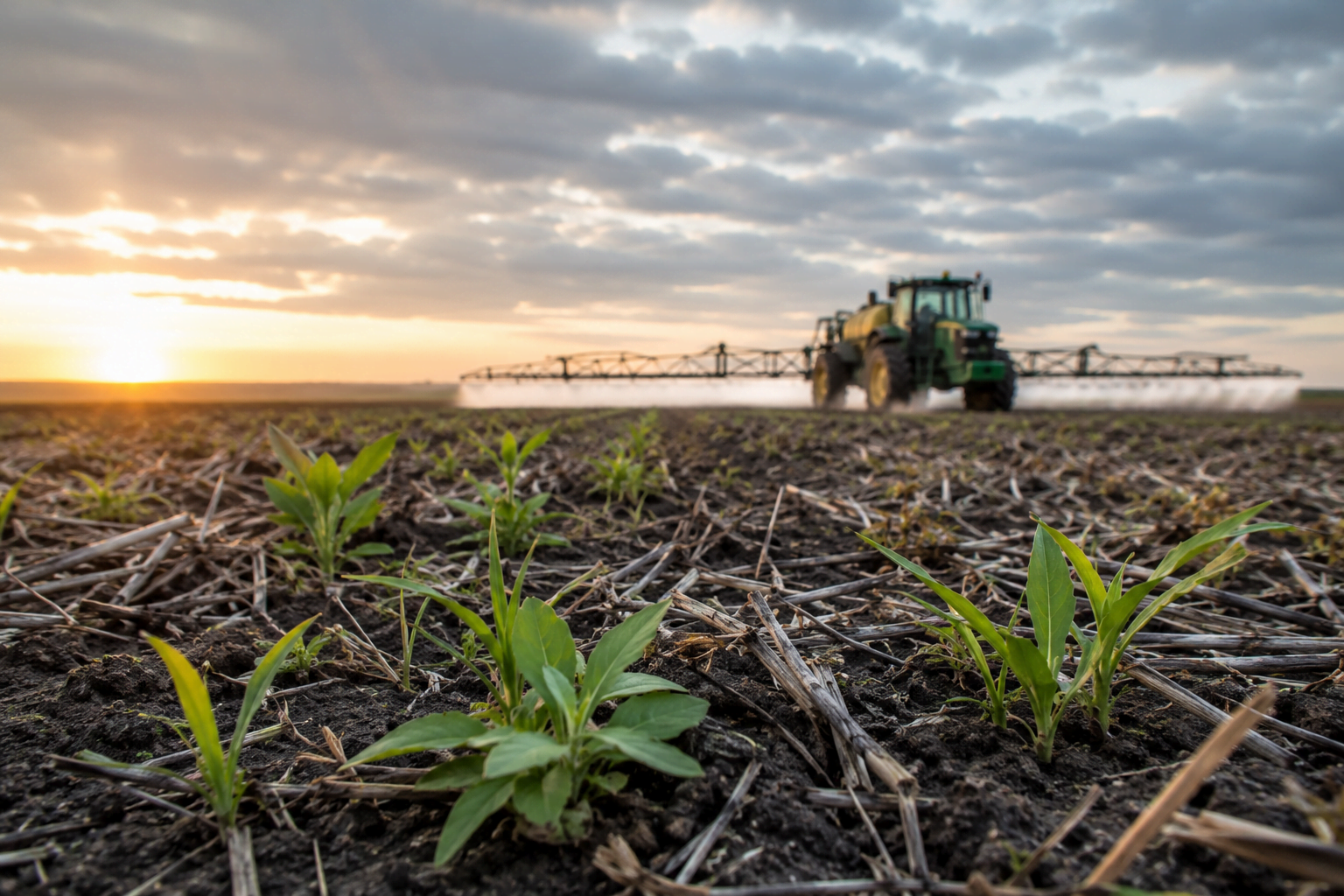
The spring burnoff application is often the first opportunity for weed control before the crop emerges. Eliminating them early is one of the best ways to give crops a head start on the season. But in many parts of Western Canada, burnoff passes are being asked to do more than they were ten or fifteen years ago.
Resistant and early season weeds continue to change the landscape and increase the pressure on burnoff programs. When early control fails, it creates pressure that becomes more difficult to manage as the season progresses. Growers in many areas are taking a closer look at how pre-seed herbicides fit into the overall weed management strategy.
Challenges with early season weeds
Kochia, volunteer canola, wild buckwheat and other weeds in cereal and pulse rotations are often the first to emerge and start growing. When these weeds are well established before the crop is seeded, they compete with the crop for moisture, nutrients and sunlight from the beginning.
In many regions, early season kochia control has become more difficult. Resistance to multiple herbicide groups is now common and kochia growth can be very rapid under favourable spring conditions. When control is delayed or less effective, early competition has a negative impact on overall crop performance. Even a few days of competition from early season weeds may not seem like much but the resources depleted and the potential stress placed on the crop can affect stand development and potential yield later.
Starting with a strong burnoff pass
A pre-seed burndown program is designed to clean up any weeds that have already emerged prior to seeding. Most programs prioritize the use of a herbicide with glyphosate because of its effectiveness on so many common species. But a pre-seed burnoff program is rarely just about one product. Tank mix partners and spray timing can make a difference in overall control.
Spraying when weeds are still small is a key way to improve results, it makes the weeds easier to control and they often requires less time to fully break down after spraying. Earlier applications also reduce the chance of surviving plants producing seeds later in the season.
Environmental conditions matter as well. Temperature, soil moisture and plant stress can all influence herbicide activity. Conditions that are favourable for plant growth are also ideal for maximizing herbicide performance.
Burnoff as part of a layered approach
The best programs treat pre-seed burnoff as the first step in a multi-layered control strategy. Effective early control takes pressure off the in-crop herbicide applications. If fewer weeds make it into the crop, in-crop herbicides can be used on smaller plants that are easier to manage. The performance of those products is improved and the risk of late season escapes may be reduced.
In some cases, the plan also includes soil-active or residual products in the pre-seed application. These products stay active in the soil for a period of time after spraying or activation. Residual control can help manage weeds as they germinate after spraying providing an extra layer of protection during early crop development.
Growers across Canada are adding these types of products to their pre-seed burnoff programs. It is another tool that helps manage the pressure on in-crop herbicides. Layered approaches like this are becoming more common as resistance issues continue to grow. Relying on a single application to solve every problem is becoming less realistic.
Timing and field conditions
The burnoff application is often a part of the very busy period when seeding equipment is already in the field. Rain, wind conditions and access to fields can compress the spray window quickly.
Despite these challenges, the timing of the burnoff spray is one of the most important factors for success. Early application also allows more flexibility for building the rest of the herbicide program.
Field scouting is one tool that helps manage these decisions. Walking fields ahead of seeding gives growers a better idea of which weeds are present and how well developed they are. The scouting information can also guide product selection and show where other tools may be needed.
Programs that incorporate this type of early field assessment are built around practical crop protection solutions.
Practical takeaways
Some small adjustments to the burnoff plan can really boost results throughout the year:
- Focus on small weeds: Smaller weeds are easier to kill and help to reduce early season crop competition.
- Think of the burnoff pass as a layer in a program: Burnoffs work best when they’re just one layer in a well thought out, multi-layered weed management strategy. When designed this way, early season tools support and enhance in-crop herbicide products.
- Prioritize field conditions and timing: Temperature, soil moisture and size/stage all impact the performance of herbicides.
- Starting off clean: Burnoff applications may not feel necessary, however, starting the season with a clean field often makes a big difference later in the growing season.