
Your Complete Guide to the Canadian Citizenship Test in 2026
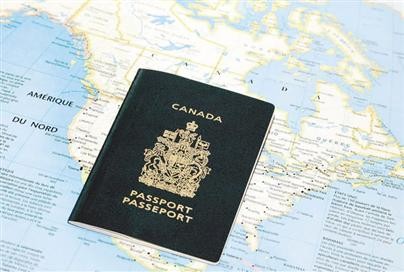
Every year, hundreds of thousands of permanent residents across Canada take the final step toward full citizenship — the Canadian citizenship test. For many, it is the most nerve-wracking part of a journey that has already taken years of patience, paperwork, and persistence. Understanding exactly what the test involves, how to study effectively, and what to expect on the day itself removes much of that anxiety and dramatically improves your chances of passing on the first attempt. This guide covers everything you need to know as a 2026 applicant. Who Has to Take the Test The Canadian citizenship test is required for applicants between the ages of 18 and 54 on the day they sign their application. If you are younger than 18 or older than 54, you are exempt from the test and the language requirement, though you still attend the ceremony and take the oath.
All test-required applicants must also demonstrate adequate knowledge of English or French. IRCC assesses this both through the application process and, if needed, during the test itself. What the Test Looks Like The test consists of 20 questions drawn from the official Discover Canada study guide. You have 30 minutes to complete it, and you need to answer at least 15 correctly — a score of 75% — to pass. Questions are a combination of multiple choice and true or false. Since 2020, most applicants take the test online via Zoom from home rather than in person at a citizenship office. Your test invitation letter will specify which format applies to you.
Either way, the content and passing threshold are identical. For the online format, you will need a computer or laptop with a working webcam and microphone. Phones and tablets are not accepted. A citizenship officer monitors the session via video and verifies your identity on camera before the test begins. You must be alone in a quiet room with no notes, phones, or other materials visible. The Topics You Must Know Discover Canada contains ten chapters covering a wide range of Canadian history, government, and values.
Not all chapters are equally represented on the test. Based on consistent applicant feedback, four areas generate the majority of questions: Canadian history covers the most ground on the test. You need to know key dates — Confederation in 1867, the Charter of Rights and Freedoms in 1982 — key figures including Sir John A. Macdonald, Wilfrid Laurier, and Tommy Douglas, and key events such as both World Wars, the residential school system, and the Quiet Revolution. Government structure is the second major cluster.
Know the three levels of government — federal, provincial or territorial, and municipal — and the specific roles within each. Understand the difference between the Senate with its 105 seats and the House of Commons with its 338 seats. Know the roles of the Prime Minister, the Governor General, and Cabinet ministers. Rights and responsibilities draws directly from the Canadian Charter of Rights and Freedoms. Know which rights belong to everyone in Canada and which are exclusive to citizens — voting in all elections, running for public office, and holding certain government positions are rights that only citizens hold. Indigenous peoples is the fourth essential area.
Understand the clear distinction between First Nations, Métis, and Inuit — they are three separate groups with distinct histories, cultures, and identities. Know the history and ongoing legacy of residential schools, and the role of the Truth and Reconciliation Commission in Canadian public life. How to Study Effectively Reading Discover Canada from cover to cover gives you a foundation, but it does not prepare you for the pressure and timing of a live test. The most effective preparation involves timed practice under conditions that closely replicate the real exam, followed by immediate, detailed review of any wrong answers.
The Canadian citizenship test preparation platform CitizenPass offers over 600 practice questions built directly from the Discover Canada guide, with an AI coaching feature that identifies your weak areas and adjusts your practice accordingly. The platform is fully bilingual in English and French — useful for applicants who prefer to study in French before switching to English for the actual test, or for Francophone applicants across Quebec and Atlantic Canada preparing in their first language. The most reliable predictor of a first-attempt pass is completing multiple full timed mock tests before the real exam.
Taking a free citizenship practice test that replicates the exact format — 20 questions, 30-minute timer, instant results — lets you identify gaps under realistic pressure rather than discovering them on test day. Aim to score consistently above 80% on practice tests before your actual exam date. If you are scoring between 75% and 80%, focus your remaining study time on the specific chapters where you keep losing points rather than reviewing everything again from the start.
What Happens After You Pass Results are communicated on the same day, whether your test is online or in person. If you pass, IRCC processes your file and schedules a citizenship ceremony. In major Canadian cities, most applicants receive their ceremony invitation within four to eight weeks of passing. Smaller cities and high-volume periods can extend this to ten or twelve weeks. The ceremony itself — held either via Zoom or in person at a citizenship office — is where you take the oath of citizenship and receive your certificate.
From that moment, you have the right to vote in all Canadian elections, to apply for a Canadian passport, and to carry every right and responsibility that comes with full Canadian citizenship. If you do not pass the first test, IRCC automatically schedules a second attempt at no additional cost, typically within four to eight weeks. The format is identical, the questions are different. Most applicants who study more specifically between attempts pass the second time. The test is designed to be passed. Prepare with structure, practise under real conditions, and you will arrive at your ceremony ready.